Are you considering a solar or energy storage installation in 2026, 2027 or beyond? The federal solar investment tax credit (ITC) is now on a phaseout timeline. However, a critical aspect of qualifying for the solar tax credit, compliance with FEOC, or Foreign Entity of Concern.
This past July, the One Big Beautiful Bill (OBB) signed into law by President Trump, had major changes impacting solar tax credits for solar installations and FEOC is a major aspect you need to understand as a consumer. If your solar installation contractor is not versed in FEOC compliance, your solar tax credit could be at risk in case of an IRS audit.
Starting on 1/1/2026, any solar or energy storage installation seeking the federal tax credit incentive must comply with FEOC requirements to be eligible.
There are four (4) countries in the world listed as foreign entities of concern and those include: China, Iran, North Korea, and Russia. Given global supply chains in the manufacturing of solar equipment, FEOC mandates a certain percentage of manufactured goods consisting of components from non-FEOC countries. The goal of FEOC ruling is to reduce dependency on countries considered hostile to the interests of the United States.
In practice, a ratio called MACR, or Material Assistance Cost Ratio, has been defined that refers to the total percentage of allowable solar and energy storage project costs that may originate from a FEOC entity. Table 1 below summarizes the required percentage of solar and energy storage equipment costs that must originate from non-FEOC countries. As you can see, the requirement will increase by 5% each year.
Table 1: FEOC MACRS Schedule
Year Solar Equipment Energy Storage Equipment
2026 40% 55%
2027 45% 60%
2028 50% 65%
2029 55% 70%
Figure 1 below provides a timeline to further illustrate. A key date to also keep in mind for solar only projects is 7/4/2026. For solar projects started before 7/4/26, as long as they contain the required level of FEOC components, they do not have to be completed on or before 12/31/2027. Solar projects starting after 7/4/26 must be completed on or before that date (12/31/27). Energy storage systems (ESS) will still qualify for the ITC after 12/31/2027.
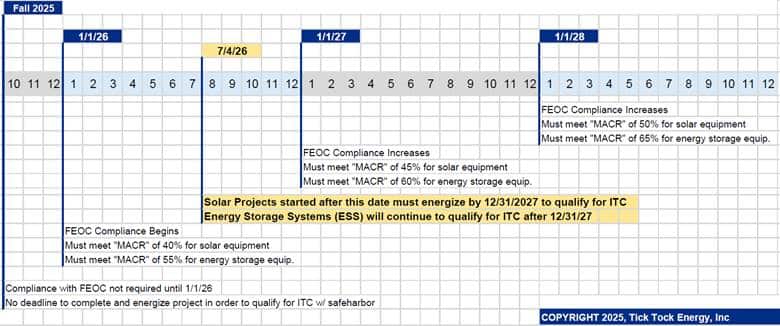
Figure 1: FEOC Compliance Timeline (Solar & Energy Storage)
If you are considering a solar or energy storage project, please reach out and contact one of our solar sales consultants. Tick Tock Energy is downstate Illinois leading solar and energy storage installation company. Celebrating our 20th anniversary in 2026, we’ve helped hundreds of farm, residential and commercial customers install solar. From start-to-finish construction along with full life-cycle service, repair and monitoring services, we ensure quality solar and storage installations and top performance. We collaborate with 3rd-party tax experts that can also assist with your solar and energy storage project tax planning. Please visit www.ticktockenergy.com for more information.
** DISCLAIMER ** Tick Tock Energy is not a tax advisor and the information above is our interpretation of current tax code. This area of the tax code may continue to evolve and change. You are advised to consult a tax professional with knowledge on energy tax credits specifically. We advise to include your tax professionals early in the planning process to validate information we present and applicability to your individual tax situation. Tick Tock Energy, Inc is not responsible for your misinterpretation any tax related matters, or errors in your tax credit application, eligibility or estimates of tax credits and/or depreciation, payment of any tax incentives funds, or other tax matters.