Is the U.S. Energy Grid Reliable?
Power outages are not always dramatic, multi-hour blackouts. For many farms and businesses, the most expensive disruption is a split-second “blip” – the lights flicker, equipment resets, a controller faults, a process step fails, a production line stops, but it all happens so quickly, it’s hard to tell anything has happened at all. Even when power returns almost immediately, the operational and financial impact can be real.
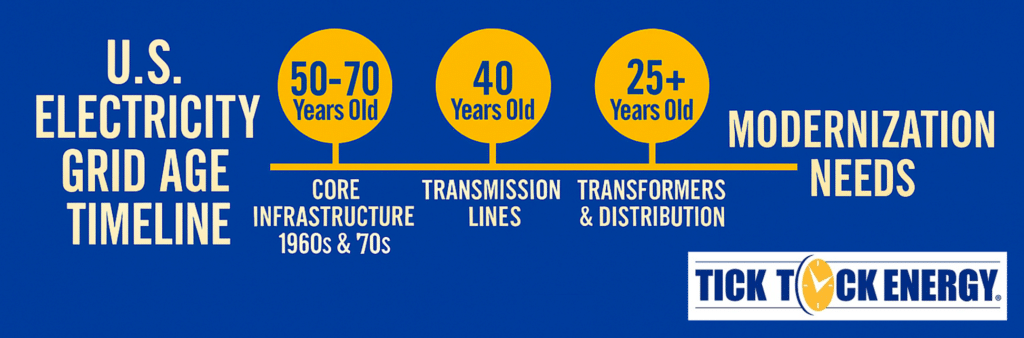
If that isn’t bad enough, most of the electrical infrastructure the U.S. relies on was built during the 60s and 70s, with few major updates. Combine this with increasing demand from AI data centers, the widespread use of electric vehicles, and ever-growing consumer needs, and you have the perfect environment for more frequent power outages that last longer and longer.
The question is no longer “Will an outage ever happen,” it’s “How prepared is your facility when it does.” As a result, power reserve planning and creating back-up power contingencies for when the grid does fail has become a necessity. In this guide, the alternative energy experts at Tick Tock Energy discuss the reliability of the United States’ aging power grid and what you can do to insulate your business from blackout woes.
The Grid at a Glance
Most days, the grid delivers power reliably. At the same time, reliability risks are rising in many regions due to aging infrastructure, tightening reserve margins in certain areas, rapid load growth, and weather-driven stress on the system. NERC, the organization responsible for assessing reliability risks for North America’s bulk power system, has repeatedly emphasized that extreme weather events pose a major reliability threat and that some areas face elevated or high risk of supply shortfalls under certain conditions.
For farms and businesses, the practical takeaway is simple: build a plan that assumes occasional power interruptions will occur, including very short ones, then protect critical loads and processes accordingly.
Why is the U.S. Power Grid at Risk of Failures?
Grid reliability is influenced by factors outside your facility, often beyond your direct control. Several trends are increasing the probability of brownouts, blackouts, and frequent short interruptions in certain regions.
U.S. Electrical Infrastructure is Too Old
Much of the U.S. grid was built decades ago. The U.S. Department of Energy has noted that a large share of transmission lines are over 25 years old and approaching the end of their typical life cycles.
Transformers are another critical point. A 2024 Department of Energy resilience report notes large power transformers are typically designed for a 40-year lifespan, and the average age of currently installed devices in the United States is around that age, with many older than 25 years.
However, plans to modernize the grid are slow, leading to reliability concerns as key components reach the end of their lifespan and risk failing.
Power Plants Are Being Retired
A healthy grid depends on having enough dispatchable resources and reserve capacity to cover unexpected spikes in demand and generator outages. The U.S. Energy Information Administration reports that generators planned significant capacity retirements in 2025, with coal making up the largest share and natural gas a notable contributor.
Retirements do not automatically mean outages, but they can reduce flexibility if replacement resources, transmission upgrades, and reliability services do not keep pace.
Demand Growth is Accelerating, Especially from Data Centers
Electricity demand is rising from multiple sources, including data centers, electrification of transportation, and building electrification. The 2025–2026 Winter Reliability Assessment from the NERC highlights that data centers are altering daily load shapes by operating around the clock, lengthening peak demand periods.
Recent reporting has also documented how data center growth is becoming a material planning and reliability concern for grid operators. Several states and municipalities are already struggling to handle the significant strain data centers put on the power grid. With the continued growth of AI, this issue is only going to grow.
Severe Weather is Causing More Frequent Outages
Whether it’s tornadoes and hurricanes in the spring, scorching temperatures in the summer, or huge blizzards in the winter, natural disasters and weather phenomena are causing more frequent outages. In fact, NERC’s State of Reliability reporting has emphasized that severe weather is responsible for many of the most severe outages and continues to challenge reliability.
Aging equipment plus extreme heat, deep freezes, wind, ice, and storms is not a great combination, especially when demand is high.