A momentary interruption can be brief enough that clocks barely change, but long enough to shut down sensitive electronics and controls.
For many operations, that is plenty of time to trigger costly impacts such as:
- Higher scrap rates in manufacturing when a process stops mid-cycle
- Livestock safety risks if ventilation, water systems, or heat lamps drop offline
- Production delays that ripple into customer delivery schedules
- Lost labor time as staff shift from productive work to outage response
- Equipment wear and damage from “hard” shutdowns and abrupt restarts
- Forced downtime if a longer outage sends staff home or halts operations entirely
If your facility experiences occasional power loss, even briefly, the next step is to quantify the true cost per event. Many teams underestimate the total impact until they account for scrap, labor, missed throughput, restart time, and equipment stress. For longer outages, it’s even worse, with significant downtime quickly eating away at profits.
What Are Some Internal Facility Issues That Can Lead to Power Problems?
Not every outage originates from the utility grid. Many facilities create their own power quality challenges, especially as end-use equipment becomes more digital and power-electronics-heavy.
Common internal contributors include:
Harmonics and Non-Linear Loads
Equipment such as variable frequency drives, certain motor controls, and other power electronics can introduce harmonic distortion, which can contribute to heat, nuisance trips, and performance issues in a distribution system. Industrial drive manufacturers note the increase in harmonics tied to modern power electronics and variable frequency drive usage.
Undersized or Aging Electrical Infrastructure
Older buildings can have electrical services and wiring that weren’t designed for today’s loads. Power quality stressors increase the risk of thermal damage and voltage instability, compromising both the efficiency and lifespan of hardware.
Installation and Distribution Issues
Overfilled conduits, loose connections, and unbalanced loads can drive heat and voltage problems. Even when the grid is stable, internal distribution issues can cause equipment faults and unexpected shutdowns.
Bottom line, grid risk is only half the story. Facility-level power quality and distribution health often determine whether a short disturbance becomes a minor flicker or a major event.
How to Protect Your Business from Power Grid Interruptions
Power reliability is not one product; it’s a layered strategy. A strong plan usually includes five parts.
1. Measure and Quantify the Cost of Disruptions
Start with a simple internal exercise:
- How many power interruptions have happened in the last 12 months, including brief ones?
- What processes stopped, and for how long?
- What scrap or rework occurred?
- How many labor hours were lost to downtime and restart?
- Were any service calls, equipment failures, or shortened equipment lifespans tied to outages?
Many teams find the “one-second” events cost more than they expected once restart time and downstream impacts are included.
2. Protect the Most Sensitive Loads First
Target the systems that fail fast and cause the biggest cascade, such as:
- Controls and programmable logic controllers
- Networking and communications gear
- Critical sensors and monitoring systems
- Process controllers for refrigeration, ventilation, and pumping
For very short events, an uninterruptible power supply and power conditioning can bridge the gap and prevent resets.
3. Keep Critical Operations Running During Longer Outages
For events lasting minutes to hours, resilience often comes from a mix of:
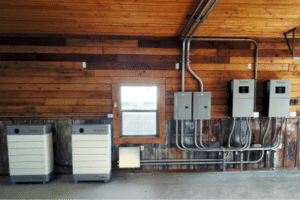
- Battery-backed circuits for essential loads
- Backup generator integration where appropriate
- Clear operating procedures for load shedding and restart
4. Reduce Reliance with On-Site Energy Production
On-site solar can reduce day-to-day grid dependence and operating costs, and it can form one piece of a resilience strategy when paired with properly designed storage and controls.
5. Build Toward a Microgrid Approach When Needed
To mitigate outage-related financial losses, facilities can implement microgrids capable of “islanding.” These systems isolate from the utility provider to support prioritized loads via distributed energy resources (DERs) and standby generation.
Get Reliable Backup Power Solutions from Tick Tock Energy
If your business or farm has experienced power “blips” or longer outages, the next step is turning that frustration into a practical plan. Reliability improvements work best when they’re tailored to your facility, your equipment, and the loads that truly cannot go down.
At Tick Tock Energy, our mission is to help businesses, farms, and homeowners become more energy and financially independent. That often starts with on-site solar to reduce reliance on the grid and lower operating costs.
For many facilities, it also includes adding the right resilience layers, such as battery energy storage for short to multi-hour outages, uninterruptible power supplies for sensitive controls and electronics, and backup generation strategies that can support critical loads when utility power isn’t available. When the situation warrants it, we can help plan a microgrid approach that prioritizes the systems you need most and keeps your operation running through a disruption.
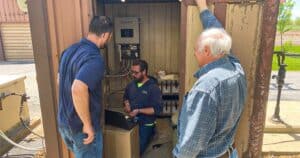
If power interruptions are costing you time, product, equipment life, or peace of mind, we can help you assess your exposure, identify your critical loads, and build a step-by-step strategy to protect your operation. Get in touch with one of our Solar Experts today!